Let’s Stop Calling It Resilience. Education Needs Adaptation.
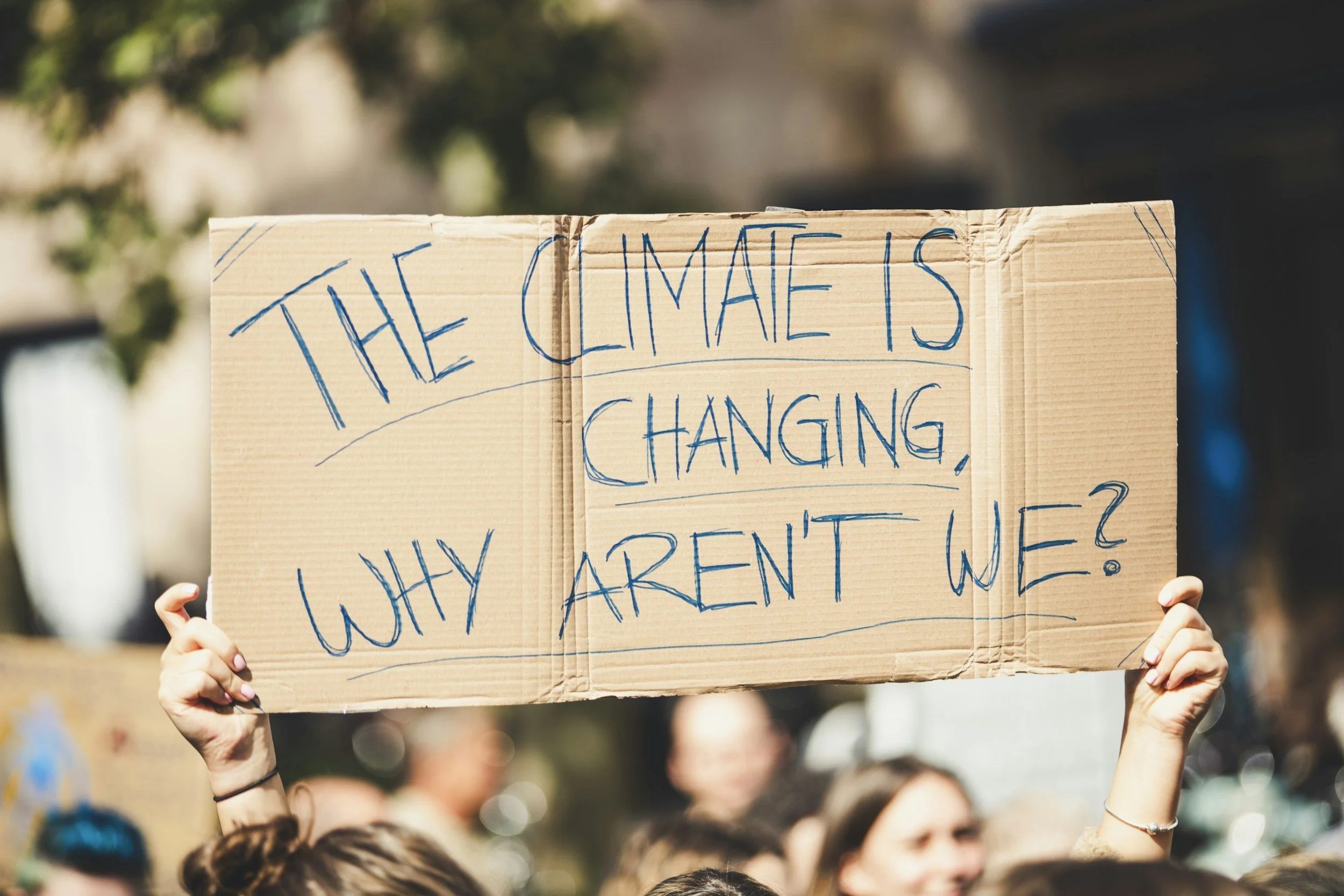
The words we use to articulate things matter, not just in education, but everywhere. Have you noticed that what used to be called spring and summer has now become normalized as “wildfire season”.
As we prepare for the next wildfire season, I have been reflecting upon the word “resiliency” in education. When I first heard it used in connection with the climate crisis, I accepted it as another way of saying “adaptation”. I’m now at a different place.
Resilience is about withstanding. Adaptation is about changing. Across Canada, climate‑exposed sectors including health, infrastructure, planning, natural resources, Indigenous governance, and federal, provincial, and municipal governments operate within an adaptation framework. Education is the only major public system using resilience, a term focused on maintaining existing structures rather than redesigning them for emerging conditions. Why?
The Gap Between Educational Change and System Design
For decades, Canadian education has used the language of system change. We’ve talked about whole‑system reform, capacity building, and deep learning. These ideas have shaped how leaders think about improvement, and they helped shift the culture of schooling in important ways.
But the unspoken reality remains; that Canada’s version of system change has been inward‑facing, focused mainly on pedagogy, leadership, professional culture, and organizational behaviour; all important, but operating within longstanding interpretations of school system structures.
Language associated with interventions, age-based classroom sizes, “learning loss” resulting from the pandemic etc. maintain an unchallenged interpretation of what education systems can be. These aren’t issues of pedagogy or leadership. They are structural design issues that impede our capacity to implement student-focused education. Our education systems haven’t changed but students, families and our communities have, and will continue to do so in the face of adversity.
Adaptation vs. Resilience
Ontario’s climate policy, from the 2011-2014 Climate Ready Adaptation Strategy to the Climate Change Adaptation and Resilience Act of 2024, calls for adaptation: redesigning systems to withstand and evolve under climate pressures. While progress is delayed, every sector except education can at least state that they should be working towards adaptation. Education the only outlier, framed instead by resilience.
How Resilience Became the Dominant Word in Education
Since the early 2010s, education systems across Canada have adopted resilience as an ascendant way to describe how students navigate difficulty. The term shifted from a personal skill to an institutional frame, reinforced through provincial research, board strategies, and important well‑being and equity initiatives.
Throughout the 2020s, as resilience became central to mental health and trauma‑informed practice, the language moved into strategic plans, well-being frameworks, and board priorities as a common feature of board‑level messaging. While the word has become entrenched in educational language, it does not align with the fullest opportunity for real system change.
What School Boards Say: A Provincial Scan
My review of 20 Ontario school board websites, balanced across urban, suburban, rural, and northern regions, reveals a striking pattern in how boards talk about climate‑related challenges:
· 12 boards, or 60 percent, reference resilience
· 0 boards reference adaptation
· 8 boards reference neither term
The pattern is even more pronounced in urban and suburban boards, where nine out of ten use resilience language and none mention adaptation. In rural and northern boards, only three out of ten reference resilience, and most avoid both terms. Across the province, resilience dominates the educational vocabulary, almost always linked to student coping and well‑being. Adaptation, the central concept in Ontario’s climate policy, is absent.
Why Adaptation Matters for Education
Adaptation acknowledges that the system itself must evolve. It’s not about maintaining what was, but preparing and re-aligning for what is coming. In education, this should involve:
· redesigning infrastructure for heat, smoke, flooding and air quality,
· updating governance to assist local decision making to match local climate risk,
· integrating education with public health and community planning and services,
· building real‑time, cross‑sector data systems that support integrated services,
· training and development, and
· the promotion of flexible student-focused learning environments.
Ontario’s Current Approach: Funding Resilience, Not Adaptation
Instead of adaptation, the Ontario Ministry of Education funds resilience through narrowly defined capital envelopes such as the School Renewal Allocation (SRA) and School Condition Improvement (SCI) grants that are designed to patch, repair, and replace failing components of school buildings. The result is a system held together by short-term fixes, not long-term planning.
According to the Financial Accountability Office, Ontario now needs 21.7 billion dollars to address the repair backlog and keep schools in a state of good repair. Climate-driven heat, storms, and moisture are accelerating deterioration, widening the gap between what schools need and what the funding model provides.
The Inherent Implications of Bill 33 on System Change
Ontario’s inability to pursue meaningful system change is now visible in the “back to basics” agenda of Bill 33, the Supporting Children and Students Act. The Act weakens local decision making and constrains funding for community schools, precisely the opposite of what adaptation requires. These shifts appear to position the system for further privatization at the very moment when evidence shows this is no time for austerity in public education. Canada remains the only G‑7 country without a national K–12 education strategy. This is the time to be bold.
The Critical Lever: Funding Models That Enable System Change
Aligning how we fund public education with why we have public education is now a critical policy question. A tweak here and an adjustment there is of no consequence. Education needs funding models capable of driving system change, not preserving outdated assumptions.
For almost 30 years, Ontario’s per‑pupil funding model has assumed that enrolment is the primary driver of how schools function. The model prioritizes efficiency, with little provision for innovation or the supports necessary to strengthen their alignment with community life.
Adaptation changes that logic. Climate pressures require stable, community anchored schools that can serve as hubs for safety, continuity, and local capacity. That means shifting from per pupil funding to per school funding: a long-term commitment from provincial and federal governments to confirm how many schools a community needs, and to fund their stability accordingly. This is the kind of funding model that can enable system redesign.
System Change May Feel Impossible, But It Isn’t
Many people think system change means tearing everything down and starting over. That’s why something like moving away from traditional age‑based classrooms feels unthinkable. It’s not that the idea is bad, but that people have been led to believe there is no alternative. System change isn’t chaos, it’s alignment; redesigning structures that can actually deliver the innovative policies and values we already have in place but can’t implement. Structure guides behaviour.
Why The Right Language Matters
The Ontario example shows that Canada’s education systems are using the wrong language in response to the climate crisis. Resilience carries a quiet assumption that existing system structures can be preserved to take education where it needs to go. That assumption is no longer compatible with the realities facing Canadian schools.
Language matters. Resilience keeps decisions inside existing structures. Boards that can frame their needs as adaptation can legitimately argue for transformation‑level funding. Adaptation opens the door to change. It demands redesign, not endurance. It calls for courage, investment, and a willingness to rethink longstanding and outdated operational concepts.
A National Moment
It’s time to retire resilience as our guiding word. Policymakers, boards, and local education partners must frame funding requests, governance reforms, and the development of student‑focused learning environments in adaptation terms. Only then will Canada’s education systems move from survival to evolution. This shift begins with clarity of language and the conviction to build the education systems our future requires and deserves.
Phil Dawes
January 3, 2026